
Staying physically active becomes more important with age, but it also needs to be safer and kinder to the body. Many older adults want to move more but worry about joint pain, balance issues, or the risk of falling. High-impact exercises may no longer feel suitable, yet complete inactivity can lead to stiffness, muscle loss, and reduced confidence. This is where gentle, low-impact movement plays a vital role. Rebounding offers a way to stay active without putting unnecessary strain on the body, helping older adults move with confidence rather than fear.
What Is Rebounding?
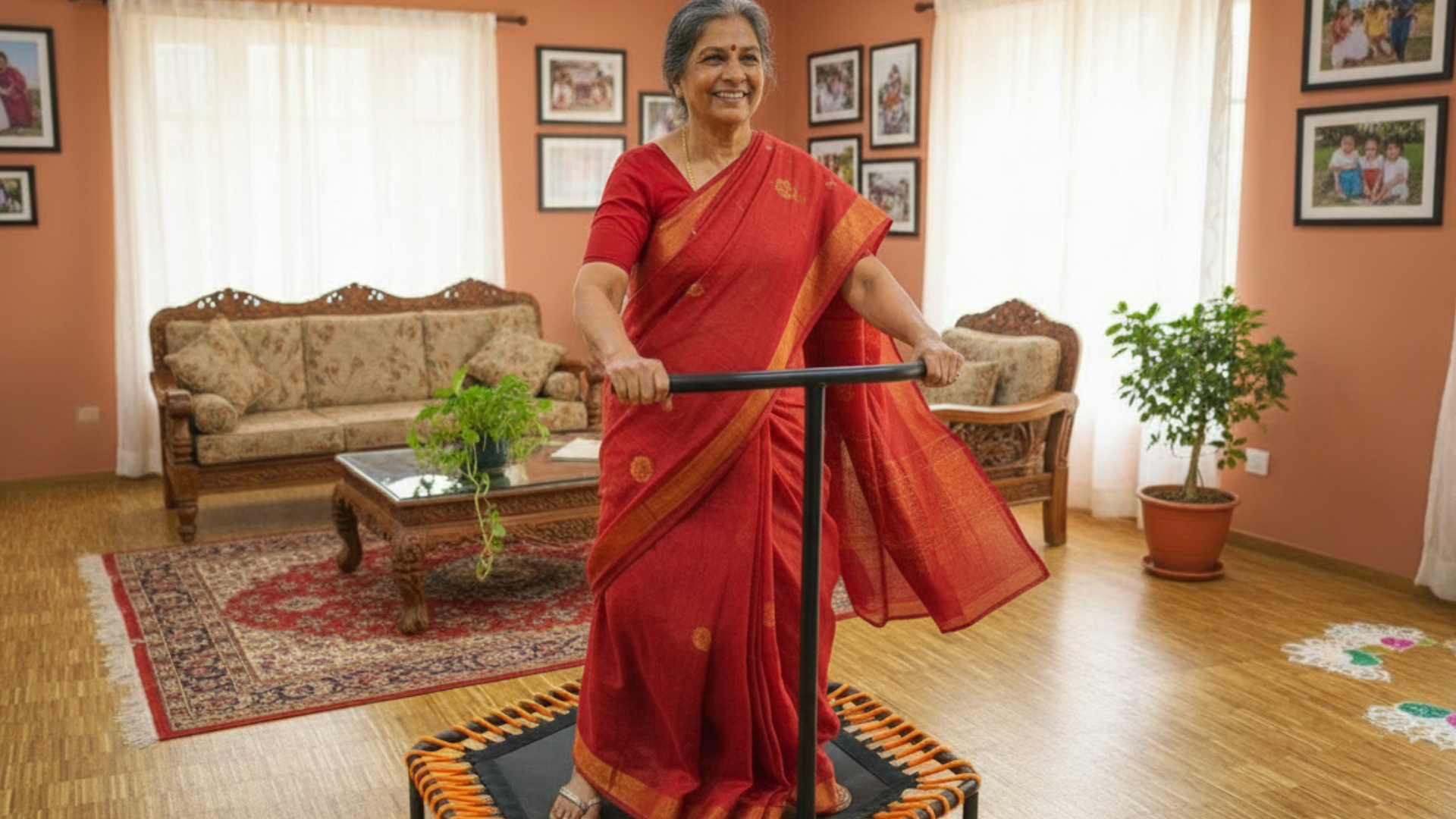
Rebounding is a form of exercise performed on a small, personal mini-trampoline, often called a rebounder. Unlike large outdoor trampolines, rebounding for seniors focuses on controlled, low-impact movements. The feet may stay on the mat or lift only slightly. The aim is not to jump high, but to use the soft, elastic surface to absorb impact while the body moves gently up and down. Most rebounders designed for older adults include a sturdy support handle, which adds an important layer of safety.
Why Rebounding Works Well for Older Adults
One of the main reasons rebounding suits ageing bodies is its low-impact nature. The trampoline mat absorbs much of the force that would otherwise travel through the knees, hips, and spine. This makes it easier on joints compared to walking on hard surfaces or doing traditional aerobics. Rebounding also allows people to exercise indoors, which is especially helpful during extreme weather, poor air quality days, or when stepping outside feels difficult.

Join Now >
Key Health Benefits of Rebounding in Later Life
Rebounding offers multiple health benefits when practised gently and regularly. It helps improve balance by engaging the core and smaller stabilising muscles that support posture. This is especially important for fall prevention. The gentle, weight-bearing movement supports bone health, which is crucial as bone density naturally reduces with age. Rebounding also provides light cardiovascular activity, helping the heart and circulation without overexertion. The rhythmic motion encourages lymphatic flow, supporting the body’s natural cleansing processes. Just as importantly, rebounding can lift mood, improve sleep, and bring back a sense of enjoyment in movement.
Who Can Benefit Most from Rebounding
Rebounding can be helpful for older adults who experience joint stiffness, early arthritis, or reduced balance confidence. It suits those who prefer short, manageable exercise sessions rather than long workouts. Seniors who spend a lot of time indoors or feel hesitant about outdoor walking may also find rebounding a comfortable alternative. For many, it serves as a gentle way to reintroduce physical activity after a long period of inactivity.
Safety First: Important Precautions Before Starting
Safety should always come first. Older adults should consult a doctor or physiotherapist before starting rebounding, especially if they have heart conditions, severe osteoporosis, vertigo, or recent fractures. It is essential to use a rebounder with a strong support handle and to place it on a non-slip surface. Wearing supportive athletic shoes helps protect the feet and ankles. The surrounding area should be clear of furniture to reduce the risk of accidental falls.
Beginner-Friendly Rebounding Movements
Simple movements are best at the beginning. Marching gently in place helps with coordination. Soft knee bends with feet staying on the mat introduce light movement without impact. Slow weight shifts from one foot to the other build balance awareness. Minimal lift bounces, where the feet barely leave the surface, can be added later. Side-to-side stepping helps improve coordination and hip stability, all while staying within a safe range of motion.
How Often and How Long Should Seniors Rebound
For most older adults, rebounding two to four times a week is sufficient. Sessions can gradually increase to ten or fifteen minutes as comfort and confidence improve. Rest days are important, and the body should never feel pushed. Consistency matters more than intensity. Even short, regular sessions can make a meaningful difference over time.
Making Rebounding a Part of Daily Life
Rebounding works best when it feels enjoyable rather than like a chore. Some people like to play soft music or include it as part of a morning routine. Others use it as a gentle movement break during the day. With proper guidance and supervision, rebounding can become a sustainable and confidence-building way to stay active, supporting independence and well-being in later life.
A rebound trampoline with a safety handle is available at the Samarth Store, making it easy to start gentle rebounding at home. For added confidence, Samarth also offers professional guidance to help you practise safely and choose movements suited to your body and health needs.